The Goddess Who Cut Off Her Own Head - or - How A City Comes To Worship A Goddess
I met a man a while back who mentioned that his hometown in India was known for worshipping a goddess who had cut off her own head. It was such an unexpected detail that I immediately wanted to know more. What goddess was this? Why would she cut off her own head? And, perhaps most interestingly, how does an entire place come to be known for worshipping her?
It took some digging to identify her, because "a goddess who beheads someone" isn't exactly a rare category in Hindu mythology. There's Kali, the fierce goddess associated with death and destruction, and Renuka, who is beheaded by her own son on her husband's orders and later worshipped in parts of India as Yellamma. But the detail that narrowed it down was that the goddess herself is holding her own severed head. That pointed to Chhinnamasta, whose name literally means "she whose head is severed."
The goddess with her head in her hand
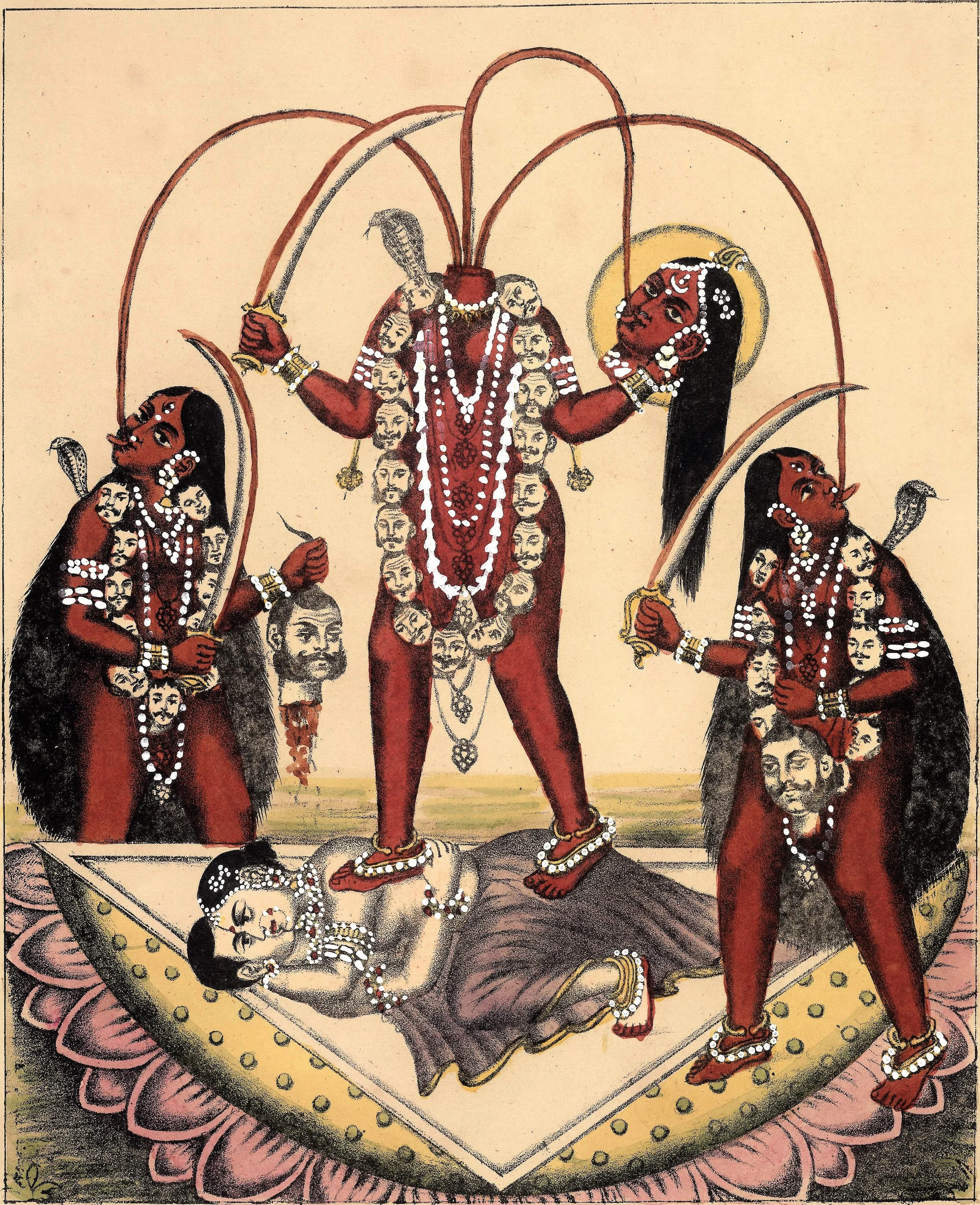
Chhinnamasta is one of the ten Mahavidyas, a group of powerful goddess forms within Shakta and Tantric traditions. Her iconography is startling: she holds her own head in one hand and a sword in the other, while streams of blood emerge from her neck.
There are several versions of her story. In one, the goddess is bathing with two attendants who become desperately hungry, so she cuts off her own head and allows them to drink from the blood flowing from her neck before restoring herself. In another, she has just destroyed a group of demons and, overcome by her own ferocity, cuts off her head and drinks her own blood. The imagery brings together seemingly opposite ideas: self-sacrifice and destruction, nourishment and death, the goddess as both giver and taker of life.
But what fascinated me wasn't really the mythology itself. It was the question of how this particular goddess became associated with a particular place.
The place where the story landed
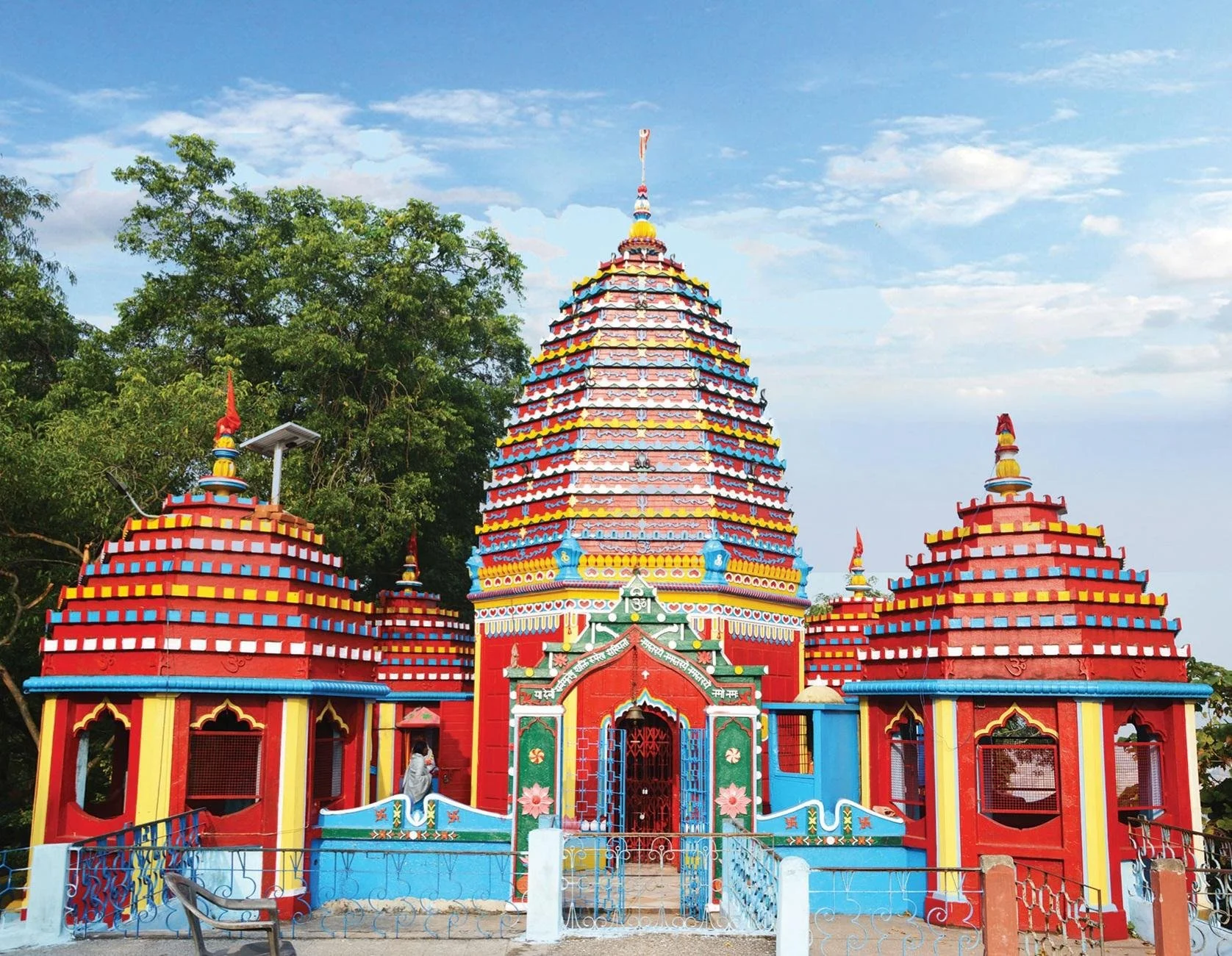
The place I was looking for is Rajrappa, in Jharkhand. Its famous Chhinnamasta temple sits at the confluence of the Bhairavi and Damodar rivers, and the object of worship is not a conventional statue but a natural rock, covered with a metal alloy casing, which devotees understand as the goddess herself.
That makes the site especially interesting because the landscape seems to come first. Rajrappa was already considered sacred by local Adivasi communities before it became an established center of Chhinnamasta worship, which sources place around the 18th century. The rivers, the rock, and the unusual geography were already there; the Chhinnamasta tradition became one of the ways that people came to understand and worship the place.
But this left me with a more basic question. What does it actually mean to worship her?
What are they actually worshipping?
When we say that people "worship a goddess," it can sound as though they are simply believing in a character from an ancient story. But worship is much more personal and active than that.
At Rajrappa, the goddess is encountered through a physical place and a physical object: the rock that devotees understand to be Chhinnamasta herself. People come to the temple, make offerings, pray, perform rituals, and ask the goddess for things. The goddess isn't simply an idea that exists in mythology. She is understood as a presence that can be approached and addressed.
And what people bring to a goddess is often deeply connected to ordinary life. They may come seeking protection, prosperity, health, fertility, the well-being of their families, or help with particular problems. They may also come to give thanks or fulfill a vow. Worship becomes a relationship between people and a divine presence that they believe can respond to their lives.
That made me wonder about Chhinnamasta herself. What does this particular goddess represent to the people who turn to her?
What Chhinnamasta represents
Her story brings together a number of ideas that are central to human life. Chhinnamasta gives nourishment while simultaneously sacrificing herself; she represents death while sustaining life; she is associated with destruction, transformation, and the surrender of the self.
The act of cutting off her own head can be understood as an extreme image of sacrifice and the surrender of the self. Yet she doesn't simply disappear. Her severed body continues to nourish others. Her blood becomes a source of life.
Rather than representing just one quality, Chhinnamasta embodies several forces at once: desire and self-control, destruction and protection, death and renewal, giving and taking. Her mythology holds these opposing forces together rather than separating them.
That gives her a particular relevance to human life. We constantly experience these same tensions ourselves. We give things up for people we love. We experience loss and renewal. We have desires that compete with other obligations. We encounter moments when something in our lives has to end for something else to begin.
The goddess becomes a way of giving form to those experiences.
A goddess and a place
The more I thought about Rajrappa, the more interested I became in the relationship between the goddess and the people who worship her.
They are living their lives: raising families, working, getting sick, falling in love, worrying about money, celebrating, grieving, and hoping for things to get better. The temple gives those ordinary experiences a place to be brought before something larger than themselves.
And that may be what it means for a goddess to belong to a place. She becomes woven into the lives of the people who live there. Her mythology may be ancient and extraordinary, but the reasons people approach her can be profoundly human.
That also changes the way I think about the landscape at Rajrappa. The rivers and the rock aren't simply scenery surrounding a temple. They are part of the relationship. The place is where people encounter the goddess, and the goddess is what gives the place its particular meaning.
So how does a city come to worship a goddess?
Maybe the answer isn't that someone simply decided to establish a temple to a goddess and then everyone began worshipping her. Religious places can emerge through much more complicated processes: landscapes acquire significance, local traditions develop, stories attach themselves to places, communities carry those traditions forward, and eventually a deity becomes inseparable from the identity of a place.
Over time, all of those layers can become so thoroughly intertwined that it becomes difficult to separate the goddess from the landscape or the landscape from the people.
That's what fascinates me about Rajrappa. Someone can tell you, almost casually, that their hometown is known for worshipping a goddess who cut off her own head. But behind that small fact is an entire world: a river confluence, a sacred rock, local traditions, an ancient goddess, generations of worshippers, and countless ordinary human hopes brought to the same place.
The goddess isn't just a character in a story. She is part of a living religious tradition and part of the relationship people have with this particular place.
And perhaps that's the part I was really trying to understand. Not why would anyone worship a goddess who cut off her own head? but what does it mean when a goddess like this becomes part of people's lives?
Maybe that is how a place comes to belong to a goddess: not because everyone agrees on exactly what she means, but because generation after generation of people keep returning to the same place, bringing their lives with them.
