The Many Faces of Tara: A Practice of Becoming Whole
We often talk about becoming our “true selves” as though there is one authentic person hiding somewhere inside us, waiting to be discovered. But what if becoming whole means something different? What if it means making room for all the parts of ourselves we have been taught to suppress?
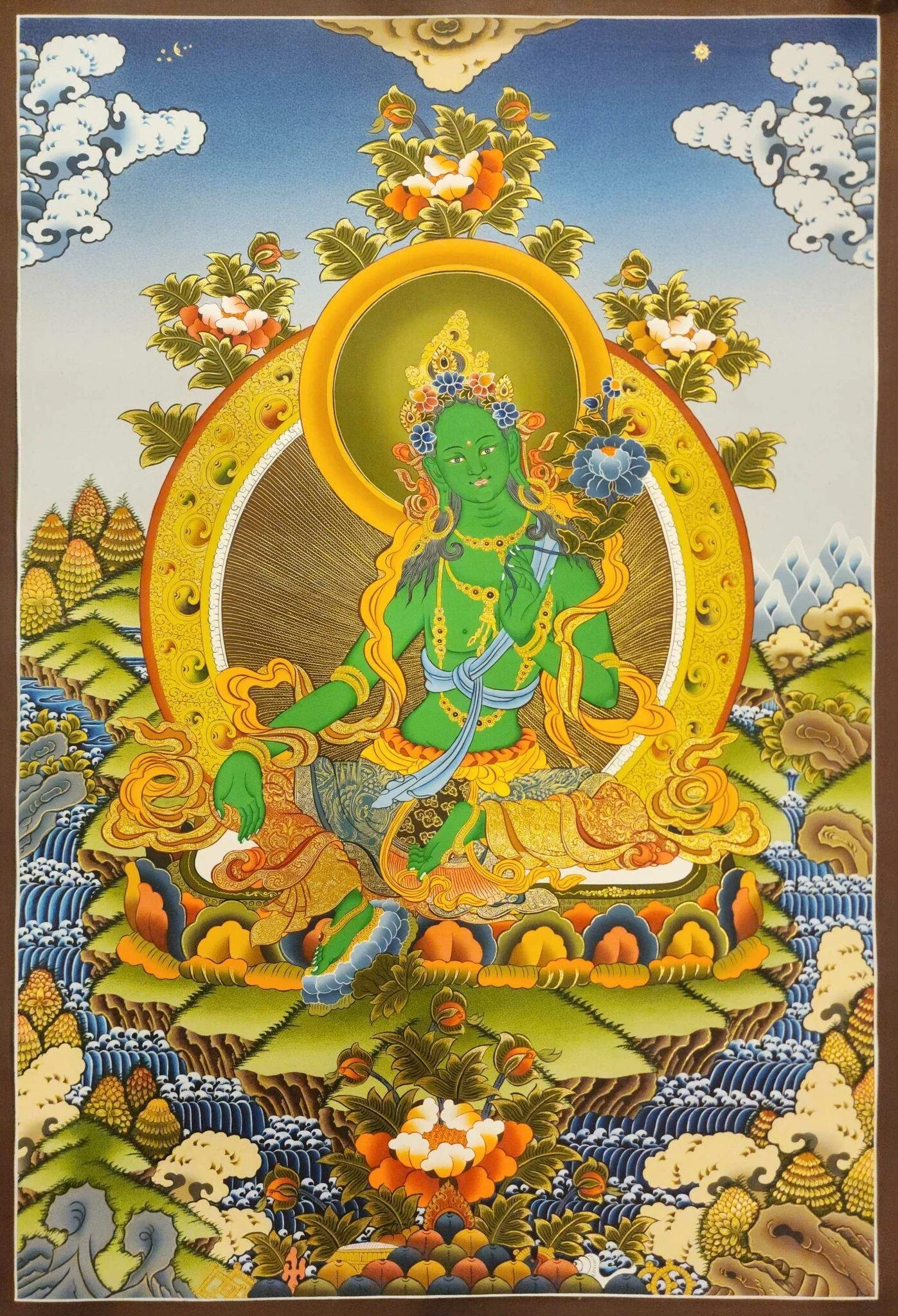
One of the things I find fascinating about Tibetan Buddhist Tantra is the multiplicity of Tara. Tara is not represented as a single, fixed personality. She appears in different colors and forms, each associated with different qualities and activities. Green Tara is often associated with compassionate action and protection. White Tara with healing and longevity. Red Tara with magnetizing and passionate energy. Other forms embody fiercer or more specialized aspects of awakened activity.
From a distance, this can look like a pantheon of different goddesses. Psychologically, however, we might also see something else: a permission structure for human complexity.
Most of us learn fairly early that certain parts of ourselves are more acceptable than others. We may be encouraged to be kind but not angry, ambitious but not intimidating, sensual but not “too much,” independent but not difficult, nurturing but not controlling. We learn to develop some qualities and hide others.
This is particularly interesting when we look at feminine archetypes. Women have historically been given a relatively narrow menu of socially acceptable ways to be: the caregiver, the good girl, the beautiful woman, the mother, the helper, the peaceful one. Qualities such as aggression, power, sexuality, ambition, ferocity, and even selfishness can become much harder to integrate.
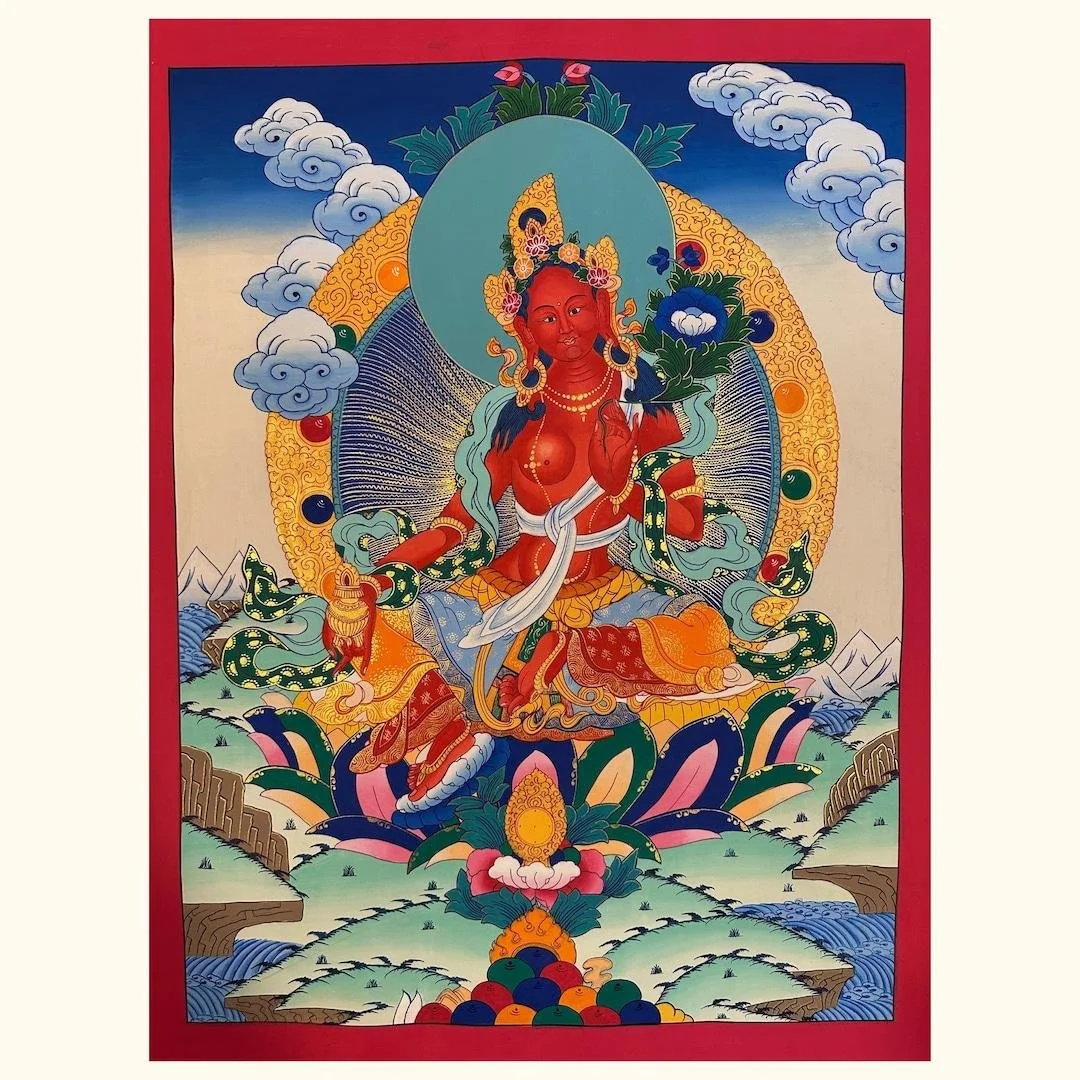
Tara offers a very different image of femininity. She doesn't have to choose between being compassionate and powerful, peaceful and fierce, nurturing and autonomous. Her different forms suggest that these qualities don't have to cancel one another out.
And perhaps that is where a modern psychological reading of Tara becomes particularly interesting.
In Jungian psychology, the shadow consists broadly of aspects of ourselves that we have pushed outside our conscious identity. These aren't necessarily bad qualities. Sometimes the shadow contains anger, assertiveness, sensuality, creativity, ambition, playfulness, or strength that we learned were unacceptable. The goal isn't to act out every impulse. It is to become conscious of what we contain.
The many Taras can be contemplated in a similar spirit—not as literal psychological parts, but as symbolic invitations to encounter different modes of being.
What would happen if you could sit with your own “green” self—the part that protects and acts compassionately? What about the “white” self that wants rest and healing? What about the red, passionate, magnetic self? Or the fierce self who is willing to say no?
The point isn't to decide which one is the “real” you.
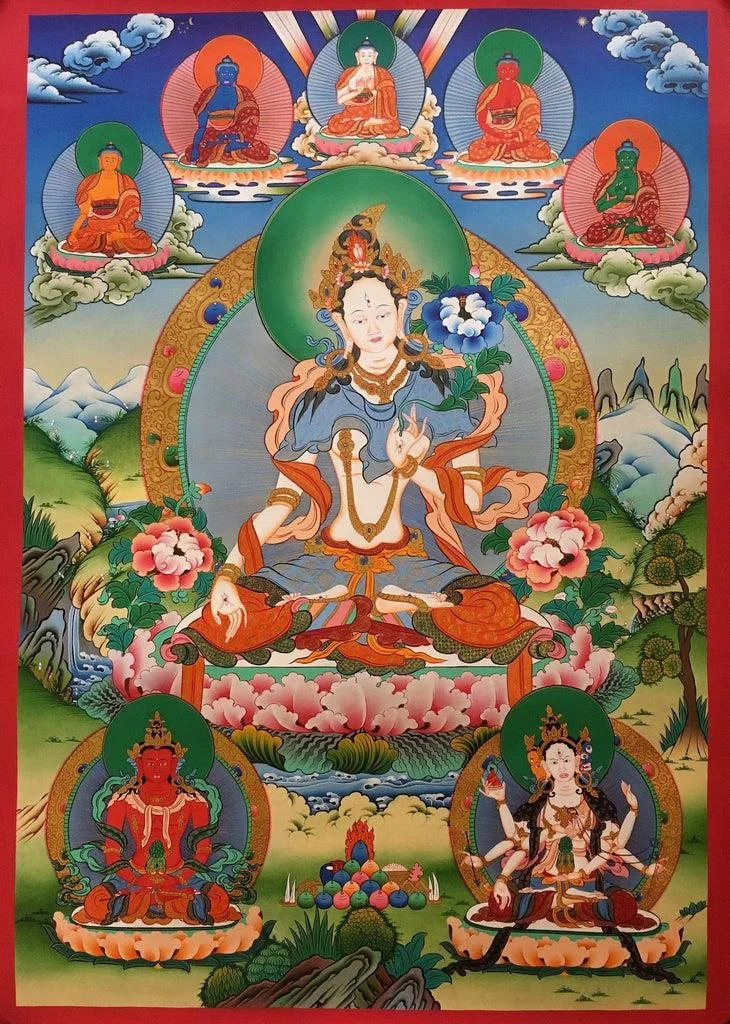
The point may be that all of them are possible ways of being.
This is also why I think the practice can be more interesting than simply telling ourselves to “love every part of ourselves.” Visualization gives those abstract qualities a form. A color, a face, a posture, an expression, a story. Instead of merely thinking I should be more assertive, we can encounter an image of a fierce feminine presence and notice what happens inside us.
The symbol gives the unconscious something to work with.
And there is something quietly radical about that. Rather than trying to eliminate the parts of ourselves that don't fit our preferred identity, we can become curious about them. Instead of asking, How do I get rid of this part of myself?, we can ask, What quality is this part carrying that I haven't learned how to use?
Perhaps the angry part contains boundaries. The ambitious part contains vitality. The sensual part contains aliveness. The fiercely independent part contains autonomy. The vulnerable part contains tenderness.
Integration doesn't mean letting every part take control. It means knowing that they are there.
The many forms of Tara therefore offer a compelling image of psychological wholeness: not a perfectly consistent self, but a self spacious enough to contain contradiction.
Maybe we don't become whole by finally discovering which version of ourselves is authentic.
Maybe we become whole by becoming large enough to hold them all.
