A Diagnosis Is an Explanation, Not a Blank Check
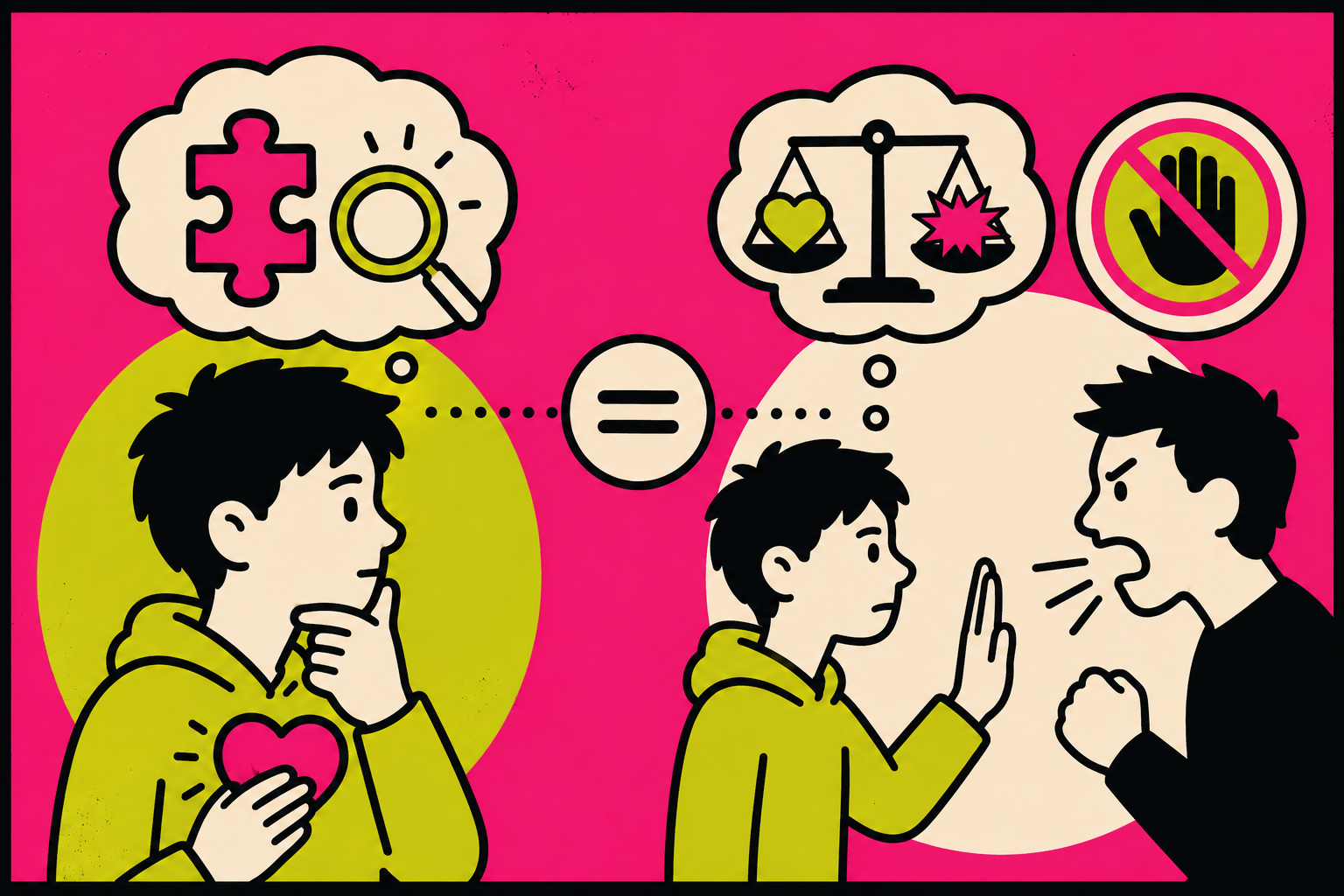
A diagnosis — autism, ADHD, borderline personality disorder, anxiety, whatever it turns out to be — can do something genuinely valuable: it gives a name and a mechanism to patterns that were previously just experienced as personal failure. Missing social cues stops being "rude" and becomes a difference in how communication is processed. Chronic lateness stops being "lazy" and becomes executive dysfunction. A meltdown stops being "dramatic" and becomes a nervous system response to sensory overload. Adults who are diagnosed later in life consistently describe this as a real shift — years of self-blame reorganized into something they can actually work with, rather than something they're simply bad at being a person.
Worth being upfront about where I land on this: I don't think of diagnostic categories as fixed, discovered facts about nature the way a broken bone or a virus is. Psychiatric diagnosis draws a line around what a given culture, at a given moment, considers to be appropriately regulated behavior, emotion, and thought — and that line moves. The DSM's own cultural formulation guidelines acknowledge that the same underlying distress can present completely differently depending on where someone is from: panic that in the U.S. tends to center on the self shows up in Japan as taijin-kyofusho, a fear centered on offending others; in parts of Southeast Asia as koro, an acute fear that one's genitals are retracting; in Malaysia as amok, a pattern of withdrawal and brooding that builds to a violent outburst — conditions with no clean Western equivalent at all. Categories also shift over time within the same culture, not just across them: homosexuality was officially classified as a mental disorder in the DSM until the APA removed it in 1973, not because the underlying reality of who people were had changed, but because the culturally decided line around what counted as disordered had.
None of that makes the categories useless — it means I hold them as tools rather than as discovered truths. I don't necessarily "believe in" mental illness diagnosis in the sense of thinking it carves reality at some universal joint. But I see real, practical utility in it: for directing treatment toward the right mechanism, for training clinicians and researchers around a shared vocabulary, for organizing research that can actually be compared across studies, and for giving someone language for a pattern they've been struggling with. It's a useful map. It's a much shakier claim about what someone essentially is, independent of the culture doing the labeling.
That treatment utility is worth taking seriously on its own terms. Therapy or training aimed at the wrong mechanism doesn't work well, no matter how much effort goes into it. Dialectical behavior therapy, developed specifically for the intense emotional dysregulation common in borderline personality disorder, is a good example of what it looks like to take a diagnosis seriously as a treatment compass rather than a label. Its founder, Marsha Linehan, built the entire model around a single dialectic: full acceptance of where a person actually is right now, held at the same time as an active, structured push toward change. She described it as "the necessity of acceptance of patients as they are within the context of moving them to change" — not acceptance instead of change, and not change that ignores what's actually true about how someone functions, but both at once.
That "both at once" is exactly where the line sits, and where things go wrong if a diagnosis gets treated as the end of the conversation instead of the start of one. There's a real, well-documented difference between an explanation and an excuse: an explanation provides context for behavior; an excuse uses that context to avoid responsibility for it. "I missed that you were upset because I have a hard time reading indirect cues" is an explanation. "I can't help being rude, I'm autistic" — offered with no follow-up, no interest in a strategy, no acknowledgment of impact — is the same fact being used to close the subject rather than open it.
The practical difference usually shows up in what comes next. An explanation gets paired with an attempt: "I struggle with reading tone because of how my brain processes it, and here's what I'm doing about it" or "I take longer to name what I'm feeling, so I need a minute before I respond instead of being expected to react right away." It also survives contact with harm: "That wasn't intentional, but I understand the effect it had, and I want to know how to make it right." An excuse tends to do the opposite of both — no strategy offered, accommodations refused as pointless, and any acknowledgment of the other person's impact quietly dropped once the diagnosis has been named.
None of this is a reason to withhold understanding until someone has proven they'll use it well. The order matters: understanding comes first, because you can't build an accurate change plan without knowing what you're actually working with. But understanding a mechanism is the beginning of the work, not a substitute for doing it — for the diagnosed person and for the people around them, who also have to recalibrate their expectations without lowering them to zero. A diagnosis explains why something is harder. It was never supposed to answer whether you're going to work on it.
