The Ender’s Game Series of SciFi Novels
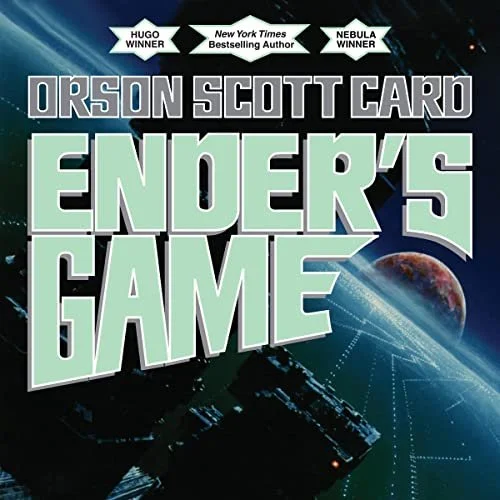
by Orson Scott Card
The Ender Quintet is the core five-book saga following Ender Wiggin: Ender's Game (1985), Speaker for the Dead (1986), Xenocide (1991), Children of the Mind (1996), and Ender in Exile (2008), a later-written book set chronologically between the first two. Card achieved something genuinely rare with the first two books — Ender's Game won both the Nebula and Hugo Award, and its sequel, Speaker for the Dead, won both awards again the following year. Back-to-back Hugo/Nebula wins across two books in the same series has happened only a handful of times in the genre's history.
Ender's Game follows a child prodigy recruited into Battle School to train for command against an alien threat to Earth — it's fast-paced, tightly plotted, and the entry point most people know, including through the 2013 film adaptation. What surprises a lot of readers is how different the rest of the series is: Speaker for the Dead jumps forward decades and shifts from military SF into something slower, more philosophical, centered on first contact, moral responsibility, and an alien species radically unlike anything from the first book. Xenocide and Children of the Mind continue that same register — dense, idea-driven, concerned with questions of personhood and coexistence rather than combat and strategy. Ender in Exile sits chronologically right after Ender's Game and works as a bridge, following Ender's early adulthood before the events of Speaker for the Dead.
Worth knowing before you commit: read Ender's Game expecting one kind of book and the rest of the quintet expecting a genuinely different one — readers who love the pacing of the first book sometimes bounce off the philosophical density of the sequels, and vice versa. Publication order (as listed above) is the standard way to read them, though some readers insert Ender in Exile right after Ender's Game to follow the internal chronology instead.
I'd recommend the series to readers who like science fiction that uses its premise to seriously interrogate ethics, empathy, and what it means to understand a mind unlike your own — not just readers looking for more of the strategic, high-stakes tone of the first book alone.
View & Purchase on Amazon
