A New Science of Heaven
Book by Robert Temple
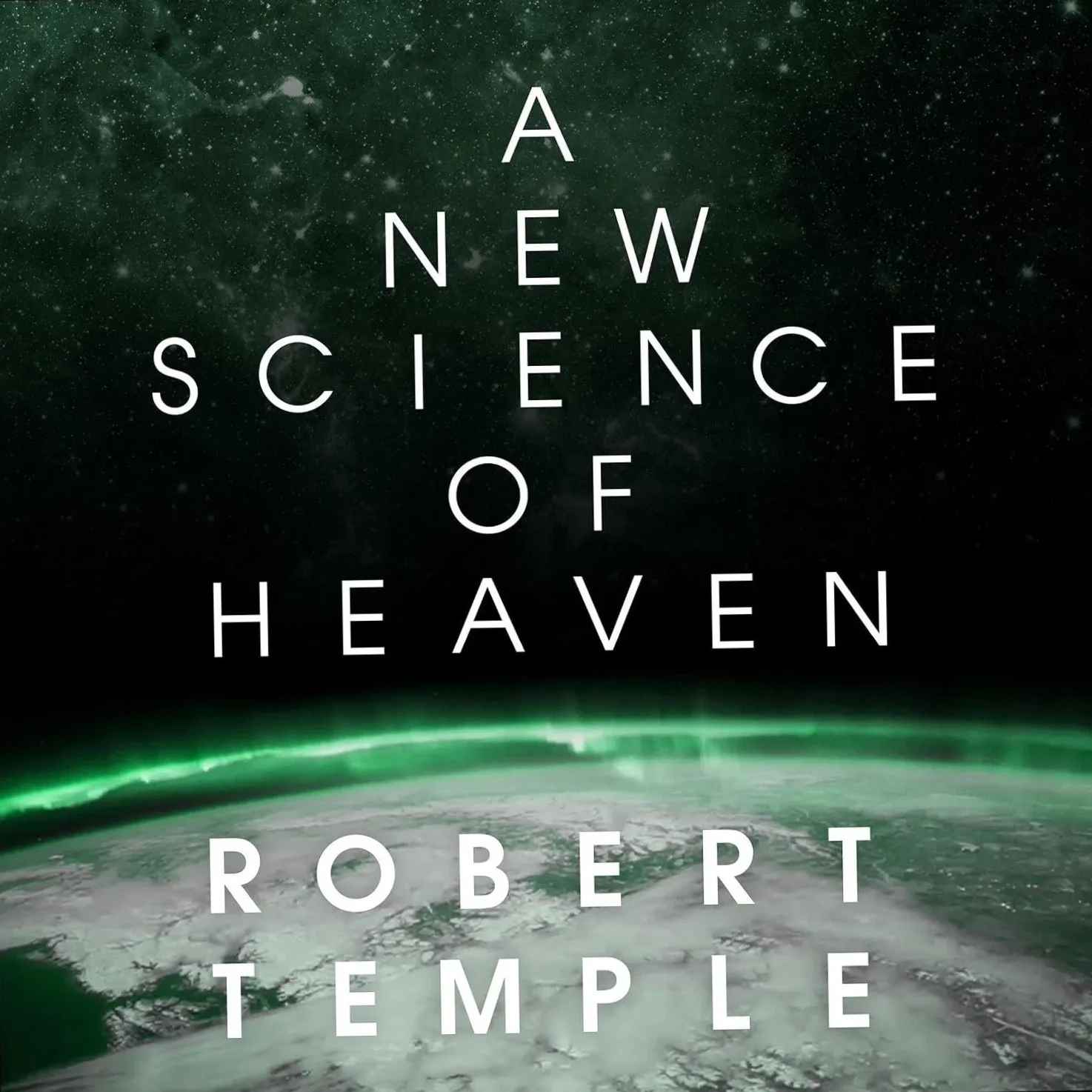
Plasma makes up over 99% of the visible universe, and yet it's the state of matter almost nobody outside physics ever thinks about. Robert Temple's A New Science of Heaven sets out to fix that, and drags the reader through an ambitious, genuinely fun tour of what plasma physics might mean for life, consciousness, and even spiritual experience along the way.
Temple's central hook is irresistible: plasma, under the right conditions, has been observed forming double helixes, cell-like structures, and self-organizing filaments — behavior that some physicists argue meets the technical criteria for life, just not life as biology has ever defined it. From there Temple goes big, connecting plasma physics to auras, near-death experiences, a "plasma body," and the two enormous, barely-studied Kordylewski dust clouds quietly orbiting between Earth and the Moon. It's the kind of book that makes you want to stop mid-chapter and just sit with the implications for a while — if even a fraction of this turns out to matter, it reframes where and how we should be looking for life, intelligence, and maybe even the roots of consciousness itself.
That said, the book asks for a lot of trust it doesn't always earn. Reviewers have pointed out that Temple moves fast between legitimate, peer-reviewed plasma research and much more speculative territory — auras, spiritual experience, the idea of a "cosmic consciousness" — without always marking clearly where the established science ends and the speculation begins. Temple's track record adds to the skepticism: he's best known for The Sirius Mystery, a book built on contested claims about ancient astronomical knowledge, and some critics come to A New Science of Heaven already wary of that same instinct to leap from a real anomaly to a sweeping, unproven theory. The title itself draws criticism too — despite the word "Heaven," this is not a book about the afterlife, and some readers feel the framing oversells a connection to spirituality that the actual physics doesn't clearly support.
I'd recommend this to anyone who likes their science with a side of wonder and doesn't mind a book that argues more than it proves. It's less a settled account of what plasma is than an invitation to imagine what it could be — and that mystery, dubious as parts of it are, is genuinely fun to sit with.
Favorite Takeaway
"We may, in fact, have been looking for signs of extra-terrestrial life in the wrong place."
There's something almost vertiginous about that sentence once it sinks in. We've spent decades scanning distant planets for chemical signatures of carbon-based life, while the substance making up nearly all of the visible universe — the stuff stars are made of, the stuff crackling through every bolt of lightning — has been sitting in plain sight, largely unexamined for anything resembling intelligence or life of its own. If Temple is even partly right, the universe may already be far stranger and far more animated than we've allowed ourselves to imagine. And if he's wrong, the question he's asking is still the kind worth losing an evening to.
